
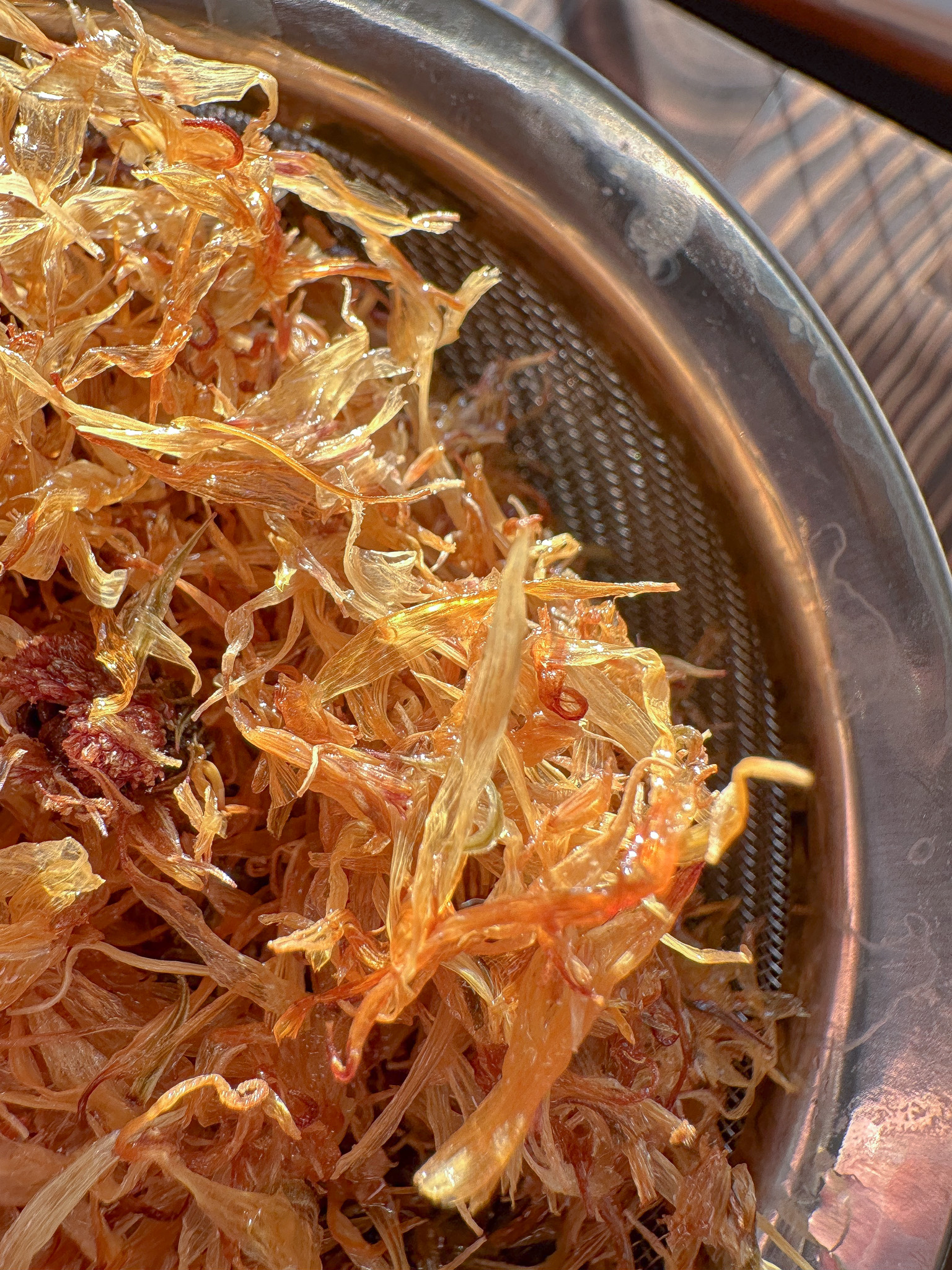
About a month ago I combined calendula petals and grapeseed oil in a mason jar. I infused them in a sunny window, giving them a good shake almost every day. It’s now ready to be strained and I’ll show you how. You can read about that post here.

There are a few things I use when I strain my herbal oil. The first is a sanitized mason jar. But it doesn’t have to be a mason jar, it can be anything that’s air-tight. Also, a wide mouth funnel like this one. If the funnel doesn’t come with a strainer attachment, then a strainer will be necessary as well. Like this one.
WHY CALENDULA OIL?

Calendula oil is a great multi-purpose, one-stop-shop oil and I personally feel that I can never have enough of it. Also it has a lot of medicinal properties, such as:
- antibacterial
- anti-fungal
- anti-inflammatory
- antioxidant
- Wound healing
- May improve skin conditions
I really find that it’s a wonder herb and can be used for so many things. If you’re looking into getting started with herbalism, calendula is a great place to start. She’s lovely, and very useful.

WHAT CAN I MAKE WITH CALENDULA OIL?
Once the oil is infused, it’s ready for use as it is. There are so many ways this golden oil can be used. It can be applied directly to the skin but my favorites are salves, creams, lip balm, etc.
I’m going to use most of it to make a salve for my sensitive skin. By the way, that’s another benefit of the oil. My skin sensitivity is pretty high and calendula has never seemed to bother me.


HOW TO MAKE YOUR OWN
Supplies
- Infused calendula oil
- A wide mouth funnel
- A strainer
Directions
- Using a sanitized mason jar, insert a wide mouth funnel and strainer.
- Pour in the contents of the infused calendula oil jar to separate the liquid from the plant material.
- Discard the used calendula petals.
- Store the oil in a cool, dark cabinet.
- Enjoy
Check back soon for the calendula oil salve post. Coming soon.
One response to “CALENDULA OIL DIY”
[…] can find that post here. Calendula is a wonderful herb for the skin. Its flowers are gentle and effective and I think […]